anhydrous chlorobutanol, mineral oil (liquid paraffin), white petrolatum.
Properties:
Broad-spectrum aminoglycoside antibiotic. It has a bactericidal effect, disrupting protein synthesis and the permeability of the cytoplasmic membrane of bacteria.
Highly active against Pseudomonas aeruginosa.
Tobramycin is active against gram-negative bacteria: Escherichia coli, Proteus spp. (indole-positive and indole-negative strains), Klebsiella spp., Serratia spp., Providencia spp., Enterobacter spp., Shigella spp., Salmonella spp., Citrobacter spp., Haemophilus influenzae; Gram-positive bacteria: Staphylococcus spp. (including strains producing penicillinase).
Prevention of postoperative infectious complications in ophthalmology.
Dosage and administration:
– For eye infections, apply a small amount of ointment (1-1.5 cm) into the conjunctival sac of the affected eye(s), 2-3 times a day, or in addition to drops at bedtime. As inflammation decreases, reduce the frequency of use until complete cessation.
– In acute infections of the eye, 1.5 cm of ointment in the eye or both eyes 3-4 times a day until improvement, then gradually reduce the dose until the reception is completely stopped. The course of treatment is 7-10 days.
Contraindications:
Hypersensitivity to tobramycin and other aminoglycosides.
Precautionary measures:
Systemic use of tobramycin is possible when the expected benefit of treatment outweighs the risk of side effects in the following cases: in patients with impaired renal function, hearing, myasthenia gravis and parkinsonism.
Side effects:
From the side of the central nervous system and peripheral nervous system: ototoxic effect, headache, lethargy, disorientation, impaired neuromuscular transmission.
From the digestive system: nausea, vomiting, increased levels of hepatic transaminases and bilirubin in the blood.
From the hemopoietic system: anemia, granulocytopenia, thrombocytopenia.
From the side of metabolism: hypocalcemia, hyponatremia, hypokalemia, hypomagnesemia.
Other: possible nephrotoxic effect, allergic reactions.
Storage:
Store at a temperature not higher than 15-30 degrees.
Package:
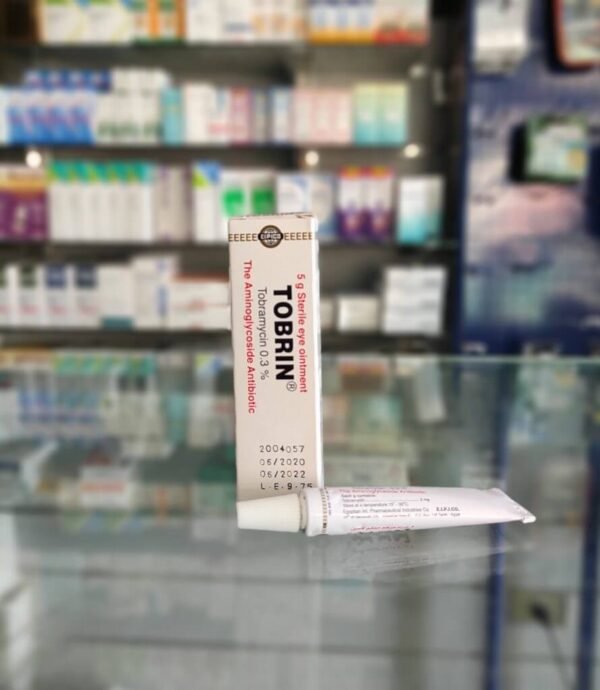
The cardboard box contains a tube of 5 grams, paper instructions.