Description:
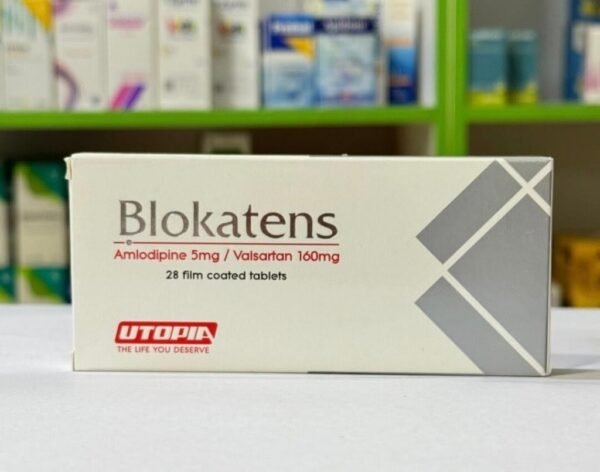
Blokatens is a combined antihypertensive medication. Amlodipine, a third-generation calcium channel blocker (CCB), inhibits transmembrane Ca2+ influx into cardiomyocytes and vascular smooth muscle cells, resulting in their relaxation. It reduces total peripheral vascular resistance (TPVR), which leads to a decrease in blood pressure (in both lying and standing positions). Long-term use does not significantly affect heart rate (HR) or catecholamine levels. Additionally, it improves glomerular filtration rate and renal plasma flow without altering renal filtration capacity or causing proteinuria.
Properties:
– Does not inhibit ACE, preventing the accumulation of bradykinin or substance P, reducing the likelihood of dry cough.
– Does not interact with or block receptors of other hormones or ion channels critical to cardiovascular system regulation.
– Reduces blood pressure without altering heart rate.
– The combination of two drugs enhances antihypertensive effects compared to monotherapy.
Indications:
– Arterial hypertension
Dosage and Administration:
Take orally with a small amount of water once daily, regardless of meals.
– Recommended daily dose: One tablet containing 5/80 mg, 5/160 mg, or 10/160 mg of Amlodipine/Valsartan.
– Maximum daily dose: 10/160 mg.
Start treatment with 5/80 mg once daily. The dose may be increased after 1-2 weeks of therapy.
Contraindications:
– Hypersensitivity to Amlodipine, other dihydropyridine derivatives, Valsartan, or excipients.
– Hereditary angioedema or angioedema during previous therapy with angiotensin II receptor antagonists.
– Severe hepatic impairment (>9 points on the Child-Pugh scale), biliary cirrhosis, or cholestasis.
– Severe renal dysfunction (creatinine clearance <30 ml/min).
– Use in patients on hemodialysis.
– Pregnancy or plans to become pregnant.
– Breastfeeding.
– Severe arterial hypotension (systolic BP <90 mm Hg).
– Age under 18 years (safety and efficacy not established).
– Shock (including cardiogenic) or collapse.
– Obstruction of the left ventricular outflow tract (e.g., hypertrophic obstructive cardiomyopathy, severe aortic stenosis).
– Hemodynamically unstable heart failure post-myocardial infarction.
– Primary hyperaldosteronism.
– Concurrent use with Aliskiren in patients with diabetes or renal dysfunction (creatinine clearance <60 ml/min).
Side Effects:
– Blood and Lymphatic System Disorders: Rarely, leukopenia, thrombocytopenia.
– Immune System Disorders: Rarely, allergic reactions.
– Metabolism and Nutrition Disorders: Rarely, hyperglycemia.
– Psychiatric Disorders: Occasionally, insomnia, mood swings.
– Nervous System Disorders:** Occasionally, taste disturbances, hypoesthesia, tremor, dysgeusia; rarely, muscle hypertonia, peripheral neuropathy.
– Eye Disorders: Occasionally, diplopia.
– Ear and Labyrinth Disorders: Occasionally, tinnitus.
– Cardiovascular System Disorders: Rarely, arrhythmias (including bradycardia, ventricular tachycardia, atrial fibrillation), myocardial infarction, vasculitis.
– Renal and Urinary Disorders: Unknown frequency, increased creatinine levels, renal dysfunction, including acute renal failure.
– General Disorders: Occasionally, fatigue, asthenia.
Storage:
Store in a place protected from light and out of reach of children at a temperature not exceeding 25°C.
Package:
A carton box contains two blister of 14 tablets each (28 tablets total) and an insert leaflet.