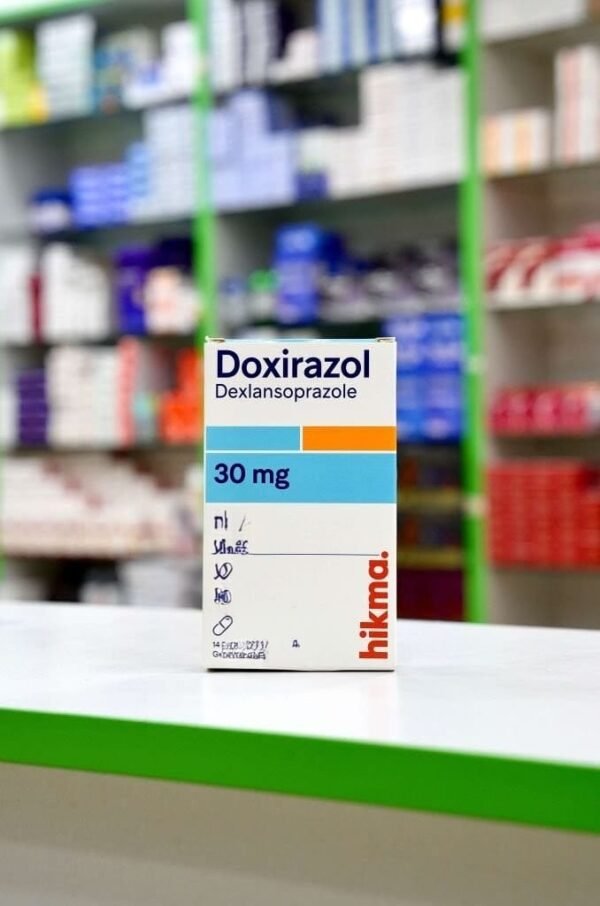
Doxirazol is a delayed-release proton pump inhibitor (PPI) containing dexlansoprazole, the R-enantiomer of lansoprazole. It features dual delayed-release technology, which allows two separate releases of medication—one shortly after ingestion and another several hours later—providing prolonged acid suppression and consistent symptom relief throughout the day. Doxirazol is designed to treat acid-related disorders by inhibiting the final step of acid production in the gastric parietal cells.
Indications for Use
Doxirazol is indicated in patients aged 12 years and older for the:
Treatment of erosive esophagitis (EE): To promote healing of EE confirmed by endoscopy (up to 8 weeks)
Maintenance of healed EE and relief of heartburn: In adults for up to 6 months, and in adolescents (12–17 years) for up to 16 weeks
Treatment of symptomatic non-erosive gastroesophageal reflux disease (GERD): For 4 weeks to relieve heartburn and other symptoms associated with acid reflux
Dosage and Administration
Healing of EE: 60 mg once daily for up to 8 weeks
Maintenance of healed EE: 30 mg once daily
Symptomatic non-erosive GERD: 30 mg once daily for 4 weeks
In patients with moderate hepatic impairment (Child-Pugh B): Do not exceed 30 mg/day
Not recommended in severe hepatic impairment (Child-Pugh C)
Capsules should be swallowed whole. For patients unable to swallow capsules, the capsule may be opened, and the granules sprinkled on a tablespoon of applesauce and consumed immediately without chewing.
Doxirazol can be taken with or without food.
Contraindications
-Hypersensitivity to dexlansoprazole, substituted benzimidazoles, or any component of the formulation
-Concomitant use with rilpivirine-containing products due to significant reduction in rilpivirine efficacy
Precautions
-Long-term PPI use may be associated with:
-Increased risk of bone fractures, especially in the hip, wrist, or spine
-Development of hypomagnesemia (monitor magnesium levels if used long-term)
-Clostridium difficile-associated diarrhea
-Vitamin B12 deficiency with prolonged use
-PPIs may mask symptoms of gastric cancer, delaying diagnosis
-Caution in patients taking warfarin, digoxin, or methotrexate
-May reduce the absorption of drugs dependent on gastric pH (e.g., atazanavir, erlotinib, ketoconazole)
Side Effects
Common side effects (≥2% of patients):
Diarrhea
Nausea
Vomiting
Abdominal pain
Flatulence
Upper respiratory tract infections
Headache
Less common but serious adverse reactions:
Hypomagnesemia, with symptoms like muscle spasms, arrhythmias, and seizures
Acute interstitial nephritis
Cutaneous lupus erythematosus and systemic lupus erythematosus
Anaphylaxis or severe hypersensitivity reactions
Pregnancy and Lactation
Pregnancy Category B: Animal studies have not demonstrated fetal harm, but adequate and well-controlled studies in pregnant women are lacking. Should be used during pregnancy only if clearly needed.
Breastfeeding: It is unknown whether dexlansoprazole is excreted in human milk. Use caution when administering to nursing mothers.
Storage Conditions
Store at temperature below 30°C.
Protect from moisture and direct sunlight.
Keep out of reach of children.
Packaging
Each carton contains 1 blister strip of 14 delayed-release capsules and a package insert with complete instructions and precautions.